

Wildlife Crossings: Restoring Connection Between Humans and Nature
Every year, millions of animals lose their lives trying to cross roads and highways that cut through once-connected habitats. Deer, elk, mountain lions, foxes, and countless smaller creatures encounter an impossible choice between finding food, shelter, or mates—and risking their lives in the process. Wildlife crossings, sometimes called “ecoducts” or “green bridges,” are a solution that blends engineering and ecology to restore that lost connection between humans and the natural world.
These crossings are more than concrete and soil—they are lifelines that help sustain biodiversity, reduce vehicle collisions, and remind us that coexistence with wildlife is possible. Across the United States and around the world, they are proving that infrastructure and ecology can thrive side by side.
Why Wildlife Crossings Matter
Roads may seem like narrow ribbons of pavement, but to wildlife they are massive, often deadly barriers. They fragment habitats, isolate populations, and cut off critical migratory and feeding routes. For large mammals like elk and deer, a single freeway can mean the difference between access to food and starvation. For smaller species—frogs, foxes, turtles—it can mean extinction within a few generations if gene flow stops.
Wildlife-vehicle collisions are also a growing human problem. In the United States alone, there are more than a million reported crashes each year involving animals, causing injuries, property damage, and loss of life. Building safe wildlife crossings dramatically reduces these incidents. Studies have shown that where crossings and proper fencing are installed, collision rates can drop by over 90 percent.
But the benefits go beyond safety. Crossings restore connectivity to fragmented ecosystems, enabling animals to migrate with the seasons, find mates, and adapt to a changing climate. They also help preserve the genetic diversity necessary for long-term survival.
Designing for Diversity: How Wildlife Crossings Work
Each wildlife crossing is designed with specific species and landscapes in mind. Some are towering vegetated bridges spanning busy highways, while others are low, shaded tunnels built beneath rural roads. The most effective crossings combine science, engineering, and ecology—ensuring that animals actually feel safe enough to use them.
Engineers and ecologists study migration patterns, camera data, and roadkill records to identify key crossing points. Fencing is often added along road edges to guide animals toward these structures and prevent them from wandering onto open lanes. Native vegetation is planted on the crossings to replicate the surrounding habitat and make animals comfortable entering.
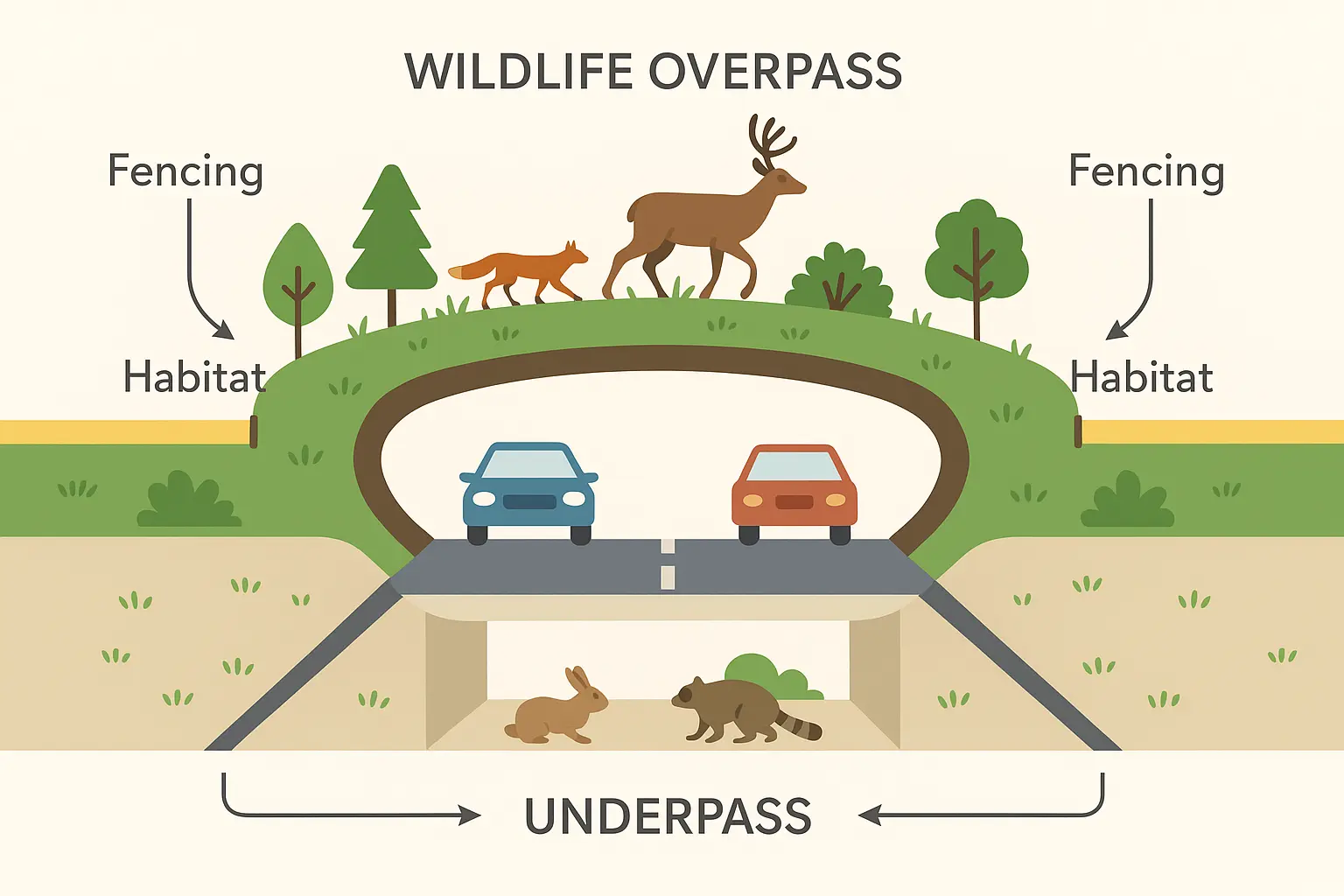
From a design perspective, overpasses are ideal for large animals like deer, elk, and bears, while underpasses and culverts are better suited for small mammals, amphibians, and reptiles. The key is ensuring crossings are located where animals naturally move—and that the structure feels familiar, not threatening.
Leading Examples in the United States
1. Robert L.B. Tobin Land Bridge — San Antonio, Texas
At Phil Hardberger Park, the Robert L.B. Tobin Land Bridge stretches across Wurzbach Parkway, uniting two halves of a restored Texas ecosystem. Opened in 2020, it features native grasslands, trees, and a trail system for both humans and wildlife. Cameras have recorded bobcats, foxes, raccoons, and deer using the bridge regularly. It’s a striking example of coexistence in an urban setting where community recreation and conservation overlap beautifully.
2. I-90 Snoqualmie Pass Wildlife Crossings — Washington State
Cutting through the Cascades, Interstate 90 once split the habitat of black bears, elk, and cougars. Today, a network of overpasses and underpasses helps these animals travel safely through forest corridors. The first major bridge opened in 2018, followed by several smaller crossings. Researchers have already documented increased animal movement across the freeway and a sharp reduction in wildlife-vehicle collisions.
3. Desert Crossings for Bighorn Sheep — Arizona
On U.S. Highway 93, specially designed overpasses allow desert bighorn sheep to safely traverse rugged canyons and cliffs. Built in partnership with the Arizona Department of Transportation and wildlife agencies, the crossings also protect drivers along one of the state’s busiest desert routes. The combination of rock walls, desert shrubs, and fencing make the crossings blend seamlessly with the landscape.
Global Inspirations
Banff National Park, Canada
Perhaps the world’s most famous network of wildlife overpasses lies in Banff National Park, Alberta. Since their installation, the number of collisions involving large mammals has dropped by more than 80 percent. Cameras routinely capture elk, bears, wolves, and moose crossing safely, proving how quickly wildlife can adapt when given the chance. Banff’s success inspired similar projects across North America and Europe.
Mandai Wildlife Bridge — Singapore
In one of the world’s most urbanized nations, Singapore built a lush 140-meter-long vegetated bridge reconnecting sections of the Central Catchment Nature Reserve. Completed in 2019, it enables pangolins, civets, and other tropical species to cross safely over Mandai Lake Road. The bridge’s design includes thick vegetation and humidity-retaining soil to mimic the forest microclimate, blending nature with city infrastructure.
Ecoducts of the Netherlands
The Netherlands pioneered “ecoducts”—wide green overpasses designed to reconnect fragmented European forests and wetlands. Some span hundreds of meters and accommodate everything from deer to amphibians. These crossings have become landmarks of ecological infrastructure, showing that connectivity can coexist with one of the world’s densest human populations.
Lessons Learned and the Path Forward
From Canada’s national parks to Singapore’s tropical cityscapes, wildlife crossings have proven themselves as both ecological and economic successes. They reduce vehicle collisions, save millions in damages, and rebuild natural corridors fragmented by human development. Yet their greatest value may be symbolic—they show that societies can evolve to respect and restore the ecosystems they depend on.
As climate change accelerates, many species will be forced to move to survive. Wildlife crossings, when planned as part of larger connectivity networks, offer resilience for both nature and people. Governments, nonprofits, and local communities can play a role in identifying critical movement corridors and advocating for crossings that serve both large and small species.
And for travelers and hikers exploring areas near these crossings—there’s another way to help. Keeping these corridors clean ensures that wildlife remains unafraid to use them. If you live near or visit a wildlife crossing, take a moment to document and remove any litter you encounter. Each act of stewardship helps maintain these ecological lifelines.
You can report and document the litter you collect through our Community Site Reports (CSR) system, where every cleanup contributes to data-driven environmental restoration. Your observations help EcoServants® map pollution patterns and inspire others to act locally for global change.
How You Can Support Wildlife Connectivity
- Stay informed about local projects—many regions are planning new wildlife corridors that need public backing.
- Drive cautiously in known wildlife crossing zones, especially at dawn and dusk.
- Volunteer for habitat restoration or roadside cleanup events near protected areas.
- Use the CSR reporting form to log sightings, debris, or conditions near crossings.
- Share this article to raise awareness of the vital role crossings play in preserving biodiversity.
Join the Movement to Reconnect Nature
Wildlife crossings represent a bridge not only for animals but for humanity’s relationship with the environment. Together, we can protect these pathways, keep them clean, and expand them worldwide. Sign up to join EcoServants®, document your cleanups, and help restore the balance between people and planet.
If you support conservation and want to see more initiatives like these thrive, please consider pledging your support to EcoServants®. Every contribution strengthens our mission to protect wildlife, restore ecosystems, and build a sustainable future for all.