
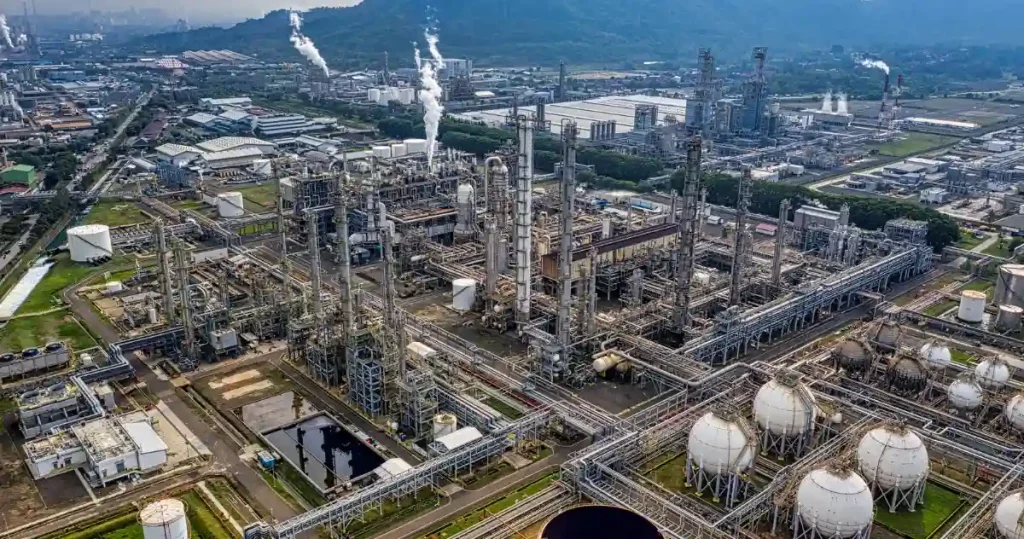
The scent of smoke signals danger to anyone who smells it.
Its thick, burning odor clogs your nose, the nerves rapidly firing a clear message to your brain: Fire is near.Humans understand the dangers of fire. The moment the alarm is activated, we know to flee from our buildings and wait for the firefighters to put it out. It takes a village of helpers and heroes to salvage what is left, and save the people who might have been left behind.
When the smoke rises, we know the culprit is fire. We don’t blame the smoke itself, nor do we grab fans for our offices or our rooms to sweep away the smoke from our own little area. We don’t do these things, because we know that won’t work in the long run if the fire continues to burn. We know that the only way to be truly safe is to douse the flames before they consume everything.
So why don’t we do the same for corporations and their carbon emissions?
Environmental organizations and eco-conscious individuals work hard everyday to limit their carbon footprint as best they can. We recycle. We reduce. We reuse. We buy glass straws, compostable single-use utensils, and green-labelled cleaning supplies. But according to the Carbon Majors analysis, just 32 major fossil fuel and cement producers were linked to more than half of global fossil fuel and cement carbon dioxide emissions in 2024. These figures include emissions generated when their products are used, not merely what comes out of their facilities. How can small consumer choices be enough while so much of the problem is tied to such a concentrated group of producers? All we are doing is fanning the smoke while the fire continues to rage on.
To clarify, I do still believe that individuals should try to live with an eco-conscious mindset. It’s important to walk through life with a give and take mentality, a shape and countershape existence as you move through the world. Though you step on the grass, it will rise again. When you slip into the ocean, the waves break upon your body, but the ocean’s tide stays the same. This move and be moved existence is one we should have with nature and our fellow humans. However, it’s extremely frustrating that we focus so much on what we, the consumers, are doing to fix the emissions, when the production decisions of a relatively small group of companies have such enormous consequences.
According to Inside Climate News, some major fossil fuel producers and their industry groups have lobbied against climate policies even as production-linked emissions remain enormous. The Carbon Majors research shows that emissions attributable to many of the largest producers increased from 2023 to 2024. Yet, continuously, governments and organizations turn it back on us, advocating for small, individual ways to decrease carbon emissions. Individual choices matter, but policies, cleaner energy, and changes in industrial production and demand are also necessary to address the fire itself.
Placing the emphasis of reduction on us has also fertilized the growth of many “eco-friendly” brands and items. While some of these eco-friendly objects are beneficial, many companies use “greenwashing” to convince you to buy their product, even when its eco-friendly packaging is misleading. This makes it even harder for the consumer to choose the right products and decrease their carbon footprint. Researching products takes time and effort, which many people are running low on due to work and other stressors. The responsibility is once again put on us to make the right decisions, yet, if these companies were honest, it would be easy to purchase eco-friendly items.
In addition to greenwashing, many eco-friendly products aren’t accessible to lower-income consumers. When genuinely more sustainable products carry substantial price premiums, it’s hard to make the investment, especially if you don’t have the money. A Kearney analysis has highlighted how pricing can undermine sustainable shopping choices. If companies really wanted to make a change for the environment, these items would be accessible and readily available for mass consumption.
Once again, I’m left wondering why the emphasis is put on us when major producers also need to make huge changes to production, investment, and the energy systems that support consumption. This conversation should be happening more in environmental circles along with the ways you can reduce your individual carbon footprint. We tend to focus on what we as individuals (or small groups) can do to help, rather than look at the larger picture. Trash cleanups, conservation efforts, recycling – these are all great things that you can do for the environment, but when we don’t hold these companies accountable, we’ll only get so far.
Collective action pays off more than one individual trying to save the world. On the flip side, it’s the company’s massive collective that creates more harm. So why aren’t we pressuring them more to create the biggest change? These companies are burning at a rapid rate, risking a future inhospitable climate, yet we think we can save it by putting out the smaller campfires one by one. Wouldn’t it be better to put out the wildfire before concerning yourself with a lit match?
If you smell smoke, will you just watch it all burn, or will you douse the flames?
Behind the Smoke: What the Carbon Majors Data Shows
To put the essay’s central question into perspective, the following figures come from InfluenceMap’s January 2026 Carbon Majors analysis of 2024 emissions. These are production-attributed figures that include both certain operational emissions and the downstream burning of marketed products.
Frequently Asked Questions
Which 32 producers were linked to more than half of global fossil fuel and cement CO₂ emissions in 2024?
Below are the first 32 entries from Carbon Majors 2024, Appendix 1, ranked by total production-attributed greenhouse gas emissions (CO₂-equivalent). Their final-column shares are percentages of global fossil fuel and cement CO₂, so those percentages are not always in descending order.
| Rank | Producer | Global fossil CO₂ share |
|---|---|---|
| 1 | Saudi Aramco | 4.28% |
| 2 | Coal India | 3.92% |
| 3 | CHN Energy | 3.91% |
| 4 | National Iranian Oil Company | 3.13% |
| 5 | Gazprom | 2.76% |
| 6 | Jinneng Group | 2.63% |
| 7 | China (Cement)* | 2.46% |
| 8 | Rosneft | 1.79% |
| 9 | CNPC | 1.70% |
| 10 | Shandong Energy | 1.74% |
| 11 | China National Coal Group | 1.70% |
| 12 | Shaanxi Coal and Chemical Industry Group | 1.62% |
| 13 | ExxonMobil | 1.58% |
| 14 | Abu Dhabi National Oil Company (ADNOC) | 1.46% |
| 15 | Chevron | 1.33% |
| 16 | Sonatrach | 1.26% |
| 17 | Iraq National Oil Company | 1.34% |
| 18 | Shanxi Coking Coal Group | 1.26% |
| 19 | QatarEnergy | 0.96% |
| 20 | Shell | 0.97% |
| 21 | Kuwait Petroleum Corporation | 1.01% |
| 22 | Petrobras | 0.95% |
| 23 | Pemex | 0.88% |
| 24 | BP | 0.80% |
| 25 | ConocoPhillips | 0.82% |
| 26 | TotalEnergies | 0.81% |
| 27 | Nigerian National Petroleum Corporation | 0.78% |
| 28 | Glencore | 0.77% |
| 29 | Lukoil | 0.76% |
| 30 | China Huaneng Group | 0.70% |
| 31 | Equinor | 0.67% |
| 32 | CNOOC | 0.69% |
* “China (Cement)” is a national production category in the dataset, not the name of a single company. InfluenceMap uses “32 companies” as shorthand in its headline finding; this table reproduces its first 32 ranked entries, including that category.
Does this mean these producers directly released more than half of all human greenhouse gases?
No. The reported finding concerns global CO₂ from fossil fuels and cement, not every greenhouse gas from every sector. Carbon Majors attributes emissions to fossil fuel and cement producers using production figures. Much of the total arises when customers burn the oil, gas, or coal sold by those producers. It is not simply a measurement of smoke emitted from their own facilities.
How concentrated are the emissions among the largest producers?
The top 10 producers together account for approximately 27.6% of global fossil fuel and cement CO₂ emissions in 2024. InfluenceMap reports that the top 20 are linked to 41.8%. The five largest state-owned producers together are linked to 18.0%, while the five largest investor-owned producers (ExxonMobil, Chevron, Shell, BP, and ConocoPhillips) are linked to 5.5%.
Are major-producer emissions going down?
Not consistently. InfluenceMap’s 2024 update records 0.8% higher emissions for the 166 active producers covered than in 2023. It also reports that roughly two-thirds of the top half of ranked entities increased their emissions year over year, versus 28% of the bottom half. These are group-level patterns, not a claim that every company increased emissions.
Are these mostly private corporations?
No. State ownership plays a major role. In 2024, the analysis attributed approximately 53.4% of global fossil fuel and cement CO₂ emissions to 70 active state-owned producers, compared with 23.7% to 94 investor-owned producers. The database also includes a small number of nation-state production categories. This distinction matters when discussing who can change production, laws, and investment.
If 32 producers are linked to half the emissions, would regulating them eliminate half the problem?
Not automatically. Production-attributed emissions are also connected to demand for fuel, electricity, transport, industrial goods, and cement. Meaningful reductions require coordinated changes in production, energy supply, infrastructure, consumption, and policy. Better producer accountability can help drive those changes, but the attribution statistic is not a prediction that a single regulation would instantly cut emissions by 50%.
What can communities and individuals do besides reducing their own footprints?
Support transparent emissions reporting, advocate for effective clean-energy and industrial policies, ask major suppliers for credible reduction plans, and participate in community environmental programs. Personal conservation and corporate accountability are complementary, not competing, approaches. EcoServants® encourages informed participation grounded in evidence and measurable outcomes.
Sources and Further Reading
- InfluenceMap (January 2026). Carbon Majors: 2024 Data Update. Primary source for the 32-entity list, emissions shares, ownership classifications, and trends.
- Dana Drugmand, Inside Climate News (January 21, 2026). Half of Fossil Fuel Carbon Emissions in 2024 Came From 32 Companies.
- Rogue Disposal & Recycling. Understanding Greenwashing: What It Is and How to Spot It.
- Kearney. Why Today’s Pricing Sabotages Sustainability.