
Environmental Science | Ecology & Public Health
The surprising relationship between oak trees, white-footed mice, blacklegged ticks, and the spread of Lyme disease.
Research-based educational article | Updated November 2026
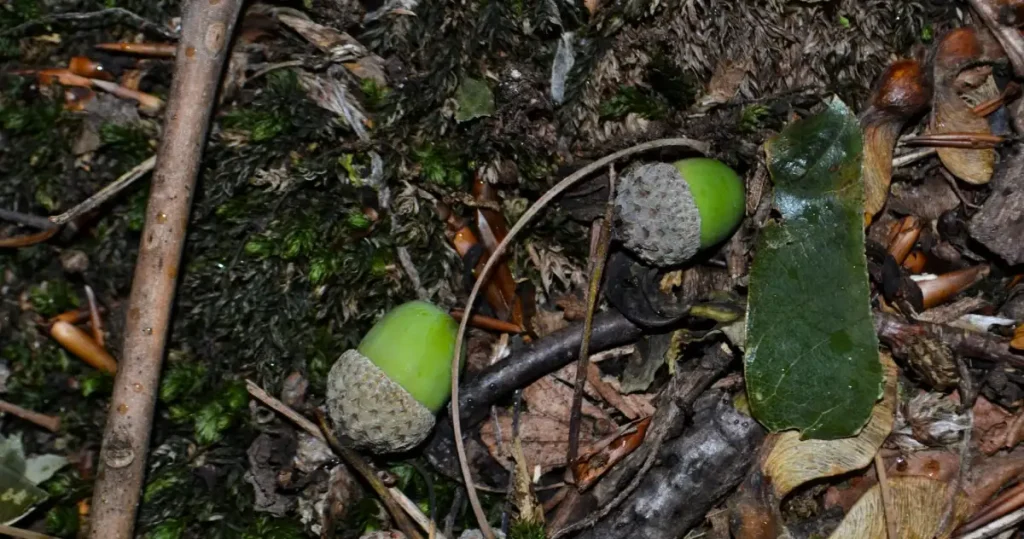
Every autumn, millions of acorns fall from oak trees, carpeting forest floors, parks, and residential neighborhoods. To most people, these small nuts represent nothing more than another sign of the changing seasons. To squirrels, deer, mice, and other wildlife, however, they represent an important source of food.
But scientists have discovered something remarkable about these seemingly ordinary seeds: the number of acorns produced during a particular autumn can help predict the abundance of Lyme disease-carrying ticks approximately two years later.
This relationship reveals how interconnected our ecosystems truly are. A productive year for oak trees can set off a chain reaction involving small mammals, tick populations, and the bacteria responsible for Lyme disease.
Understanding these connections offers researchers, conservation organizations, and public health officials an opportunity to anticipate changes in disease risk before they become apparent.
Understanding Lyme Disease and Its Transmission
Lyme disease is a bacterial infection transmitted primarily through the bites of infected blacklegged ticks, commonly called deer ticks. In the eastern and central United States, the principal vector is Ixodes scapularis. The disease is most commonly associated with the bacterium Borrelia burgdorferi.
According to the Centers for Disease Control and Prevention (CDC), Lyme disease occurs most frequently in the northeastern, mid-Atlantic, and upper Midwestern regions of the United States.
Although adult blacklegged ticks can transmit the infection, immature ticks known as nymphs present a particularly significant risk. Approximately the size of a poppy seed, nymphs are easily overlooked when attached to human skin.
Blacklegged ticks progress through four developmental stages: egg, larva, nymph, and adult. Their life cycle typically takes approximately two years, although environmental conditions can extend development.
The ticks require blood meals to develop, feeding on mammals, birds, and other vertebrates during different life stages.
This is where oak trees and their acorns enter the picture.
The Acorn Connection: How Oak Trees Influence Disease Risk
Oak trees periodically experience exceptionally productive seed years known as mast years. During these events, oak populations produce considerably more acorns than in typical years.
These unusually abundant food supplies can have substantial consequences for the surrounding wildlife community.
One important beneficiary is the white-footed mouse (Peromyscus leucopus).
White-footed mice consume acorns and can store them for later use. When food supplies are abundant, greater numbers of mice may survive winter, reproduce, and contribute to larger populations during the following spring and summer.
Research conducted in the forests of New York has demonstrated a strong connection between autumn acorn abundance and white-footed mouse populations the following year.
This matters because white-footed mice are highly effective reservoir hosts for Borrelia burgdorferi.
A reservoir host is an animal capable of maintaining a pathogen and passing it to disease vectors.
When immature blacklegged ticks feed on infected white-footed mice, they can acquire the bacteria responsible for Lyme disease. Those ticks may subsequently transmit the bacteria to humans after developing into nymphs or adults.
Consequently, a particularly abundant acorn crop can indirectly contribute to increased numbers of infected ticks in subsequent years.
The Two-Year Timeline: From Acorns to Ticks
The relationship between acorn production and Lyme disease risk does not unfold immediately. Instead, it generally develops over approximately two years.
Consider a hypothetical example beginning with an exceptionally productive autumn in 2026.
Autumn 2026: An abundant acorn crop
Oak trees produce unusually large quantities of acorns, providing substantial food resources for white-footed mice and other seed-eating wildlife.
Spring and summer 2027: Mouse populations expand
The abundant food supply contributes to increased survival and reproduction among mice. Growing mouse populations provide more opportunities for larval blacklegged ticks to find suitable hosts.
Summer and autumn 2027: Immature ticks acquire infections
Larval ticks feed on mice and other animals. Some larvae acquire Borrelia burgdorferi when feeding on infected hosts. Successfully fed larvae subsequently develop toward the nymphal stage.
Spring and summer 2028: Potentially elevated Lyme disease exposure
More infected nymphal ticks may be present in the environment. Because nymphs are small and frequently go unnoticed, their increased abundance can elevate the potential for human exposure.
This example illustrates a relationship documented in ecological research rather than a guaranteed prediction for any particular location.
The crucial distinction is that acorn abundance primarily forecasts changes in the environmental hazard, especially the density of infected nymphal ticks. Actual human Lyme disease cases also depend on human outdoor activity, prevention practices, infection surveillance, and other factors.
What Scientific Research Has Revealed
Some of the most influential research connecting acorns to Lyme disease has been conducted by ecologist Richard S. Ostfeld and colleagues.
A study published in Vector-Borne and Zoonotic Diseases in 2001 examined acorn production, white-footed mouse populations, and blacklegged ticks in southeastern New York.
Researchers found that autumn acorn production strongly influenced mouse abundance the following summer. Mouse abundance, in turn, influenced the number of infected nymphal ticks in the subsequent year.
These findings suggested that acorn production could provide an early warning approximately 1.75 years before increases in infected nymphal ticks.
Another important study, published in the Proceedings of the National Academy of Sciences in 2006, analyzed ecological conditions across 13 years of monitoring in Dutchess County, New York.
The researchers compared several potential influences on Lyme disease risk, including temperature, rainfall, deer abundance, mouse populations, chipmunks, and acorn production.
They identified two particularly strong predictors of the density of infected nymphal ticks: the abundance of mice and chipmunks in the preceding year and the abundance of acorns approximately two years earlier.
A separate 2005 study investigated whether acorns, mice, or weather conditions best predicted reported human Lyme disease incidence.
Acorn production and mouse abundance were strong predictors in Dutchess County, although their predictive performance was weaker when researchers examined broader geographic regions.
This distinction is important. A relationship observed in one forest or county cannot automatically be applied to an entire state or nation.
Long-term ecological monitoring has continued to reinforce the importance of white-footed mice and oak acorn production in understanding local changes in nymphal tick abundance.
Collectively, these studies demonstrate that the ecological foundations of Lyme disease can be measurable years before the associated tick populations reach their greatest abundance.
Why White-Footed Mice Are So Important
White-footed mice play an especially important role because they are both suitable feeding hosts for immature ticks and effective reservoirs for Lyme disease bacteria.
When larval ticks feed on infected mice, a substantial proportion can acquire Borrelia burgdorferi.
The ticks retain the infection as they develop into subsequent life stages.
Mice are also numerous in many northeastern forests and can thrive in fragmented habitats, including wooded neighborhoods and forest edges.
However, mice are not the only animals involved.
Eastern chipmunks, certain shrews, birds, and other wildlife can influence tick survival and the circulation of disease-causing bacteria.
White-tailed deer are particularly important hosts for adult blacklegged ticks and help sustain tick populations. However, deer do not serve as competent reservoirs for the Lyme disease bacterium itself.
These different ecological roles help explain why simply counting deer, or even counting ticks without identifying their developmental stage and infection status, may provide an incomplete picture of disease risk.
Can Acorns Reliably Predict a Lyme Disease Outbreak?
The answer is promising, but qualified.
Acorn abundance can be a useful early indicator of future Lyme disease exposure risk, particularly in oak-dominated forests where white-footed mice are important tick hosts.
However, acorn production alone cannot reliably predict the exact number of human Lyme disease cases in a given year.
Several additional factors influence whether an abundant acorn crop eventually produces a higher-risk tick season.
These include the survival of immature ticks, environmental moisture, temperature, local predator populations, alternative wildlife hosts, forest composition, and human exposure.
Not every abundant acorn year produces identical ecological consequences.
Likewise, Lyme disease occurs in regions where oak trees are uncommon or absent, meaning acorn production is not a universal forecasting tool.
A particularly important distinction exists between three different measurements:
- Tick abundance: The number of ticks present in a particular environment.
- Tick infection prevalence: The percentage of sampled ticks carrying the Lyme disease bacterium.
- Density of infected nymphs: The estimated number of infected nymphal ticks within a given area.
The third measurement is especially valuable for evaluating environmental exposure risk because it combines tick abundance with infection prevalence.
Scientific studies therefore frequently focus on the density of infected nymphs rather than reported Lyme disease cases alone.
Researchers must also account for the possibility that changing human behavior or improvements in tick prevention could reduce actual infections even during years when infected ticks are abundant.
Turning Acorn Counts Into an Environmental Monitoring Tool
One particularly exciting implication of this research is that acorn monitoring could become part of broader community-based environmental observation programs.
Unlike specialized laboratory testing, basic acorn abundance observations can be conducted with relatively inexpensive equipment.
Community scientists, environmental organizations, schools, and conservation groups could establish repeatable monitoring locations beneath selected oak trees.
During autumn, observers could count fallen acorns within standardized sampling areas and document differences between locations and years.
For meaningful comparisons, the monitoring process should record the oak species, sampling area, observation date, site conditions, and number of acorns.
For example, a monitoring program might designate several one-square-meter sampling plots beneath selected oak trees. Participants could count newly fallen acorns at regular intervals during the seed-producing season.
Because acorns can be consumed or removed by wildlife, a standardized protocol would also need to account for collection frequency and the distinction between newly fallen and previously accumulated acorns.
Recording information consistently is essential.
A count of 100 acorns from one square meter cannot be meaningfully compared with a count of 100 acorns scattered across an entire park.
Similarly, observing one exceptionally productive tree does not necessarily establish that the surrounding forest experienced a mast year.
Multiple trees and repeated annual observations would provide more useful information.
Once several years of records exist, researchers could compare acorn production with subsequent mouse population measurements, tick surveillance results, and publicly available health data.
Such a system would not independently establish future Lyme disease incidence. Instead, it could provide one component of a broader ecological early-warning framework.
Why Long-Term Environmental Data Matters
The acorn-Lyme disease relationship highlights the importance of collecting environmental information consistently over time.
A single observation may seem insignificant. An acorn count, a mouse sighting, or a tick survey might provide little meaningful insight by itself.
When these observations are collected using standardized methods across multiple years, however, patterns can emerge.
Researchers can identify relationships between food availability, animal populations, vector abundance, and environmental conditions.
These connections are particularly important because ecological processes often operate on delayed timelines.
The environmental conditions influencing a disease risk today may have originated months or years earlier.
Long-term monitoring also helps distinguish genuine ecological patterns from coincidental relationships.
For environmental organizations, this creates opportunities to contribute to public health through carefully designed citizen science and data collection initiatives.
The greatest value comes not merely from gathering large quantities of information, but from ensuring that observations are accurate, comparable, geographically relevant, and properly documented.
From Prediction to Prevention
Understanding future tick risk is useful only if that information leads to effective prevention.
If local ecological monitoring suggests that unusually high numbers of infected ticks may emerge in a future season, public health officials and community organizations could use that information to strengthen outreach.
Educational campaigns could remind residents to use EPA-registered insect repellents, wear protective clothing, check themselves and their pets for ticks, and remove attached ticks promptly.
Parks, schools, and outdoor recreation programs could also reinforce preventive practices in advance of anticipated periods of increased exposure.
The CDC recommends using appropriate repellents, treating clothing and outdoor gear with products containing 0.5% permethrin, and checking for ticks after spending time in grassy, brushy, or wooded areas.
Property owners can also reduce contact with ticks by maintaining vegetation around commonly used outdoor spaces and creating separation between recreational areas and wooded habitat.
Forecasts based on ecological indicators should complement these established prevention measures, not replace them.
Even during years of relatively low predicted tick abundance, an individual infected tick can still transmit Lyme disease.
A Small Seed With Important Implications
The connection between acorns and Lyme disease provides a compelling example of how environmental systems influence human health.
An oak tree produces acorns. Acorns support mice. Mice provide food for immature ticks and can transmit bacteria to them. Those ticks eventually develop into the nymphs responsible for many human Lyme disease exposures.
The entire sequence may unfold across approximately two years.
What begins as a natural fluctuation in forest seed production can therefore influence the distribution of a disease vector long after the acorns have disappeared.
Yet this discovery also demonstrates the limitations of simple environmental predictions. Acorns are an important ecological indicator, not a definitive forecast of human infections.
Their greatest potential lies in combining acorn observations with wildlife monitoring, tick sampling, weather information, and public health surveillance.
By studying these connections, scientists and communities can move toward a more informed understanding of how ecosystems shape disease risk.
The next time an autumn forest floor is covered with acorns, it may be worth considering what those seeds reveal about the ecological changes already underway.
Sometimes, understanding tomorrow’s environmental challenges begins with paying attention to the smallest details in nature today.
References
- Ostfeld, R. S., Schauber, E. M., Canham, C. D., Keesing, F., Jones, C. G., & Wolff, J. O. (2001). Effects of acorn production and mouse abundance on abundance and Borrelia burgdorferi infection prevalence of nymphal Ixodes scapularis ticks. Vector-Borne and Zoonotic Diseases, 1(1), 55–63. Source.
- Ostfeld, R. S., Canham, C. D., Oggenfuss, K., Winchcombe, R. J., & Keesing, F. (2006). Climate, deer, rodents, and acorns as determinants of variation in Lyme-disease risk. Proceedings of the National Academy of Sciences, 103(27), 10425–10430. Source.
- Schauber, E. M., Ostfeld, R. S., & Evans, A. S., Jr. (2005). What is the best predictor of annual Lyme disease incidence: Weather, mice, or acorns? Ecological Applications, 15(2), 575–586. Source.
- Jones, C. G., Ostfeld, R. S., Richard, M. P., Schauber, E. M., & Wolff, J. O. (1998). Chain reactions linking acorns to gypsy moth outbreaks and Lyme disease risk. Science, 279(5353), 1023–1026. Source.
- Centers for Disease Control and Prevention. How Lyme disease spreads. Source.
- Centers for Disease Control and Prevention. Tick lifecycles. Source.
- Centers for Disease Control and Prevention. Preventing Lyme disease. Source.