

By Andrew Oliver, Creative Writing Intern
The FIFA World Cup is not just a soccer tournament. It is a special event for the world to come together. It is a chance for people from all walks of life to unify around a common passion for the game. This year, that unity comes with a risk.
The 2026 World Cup is particularly concerning because of how hot the conditions may be during the games. Many venues are predicted to experience extreme levels of heat that could put player safety at risk. As a result, scientists and experts are voicing their concerns about the event. This includes Andrew Simms, director of the New Weather Institute, who expressed concerns over player safety because “things can go wrong very quickly when people overheat.”
Why Is It So Hot?
The dangers surrounding heat at the FIFA World Cup are partially due to the effects of climate change. In a study published by the German Journal of Exercise and Sport Research, physical exertion in extreme heat can lead to hyperthermia. Hyperthermia, in turn, can cause heat stroke, collapse, heat exhaustion, and heat cramps. The human body can regulate heat to prevent hyperthermia, mainly through increased sweating and plasma volume. However, that may not be enough to keep up with an extremely hot environment. The risks involving athletics and extreme heat are becoming more dangerous as Earth’s climate becomes warmer.
This heat becomes worse when combined with high humidity. Humidity creates an effect where the heat feels hotter than it actually is. High humidity affects places like Miami, one of the host cities, where 90 degrees Fahrenheit can feel more than 10 degrees warmer. To make things worse, high humidity makes heat more dangerous by reducing the cooling effect of sweat.
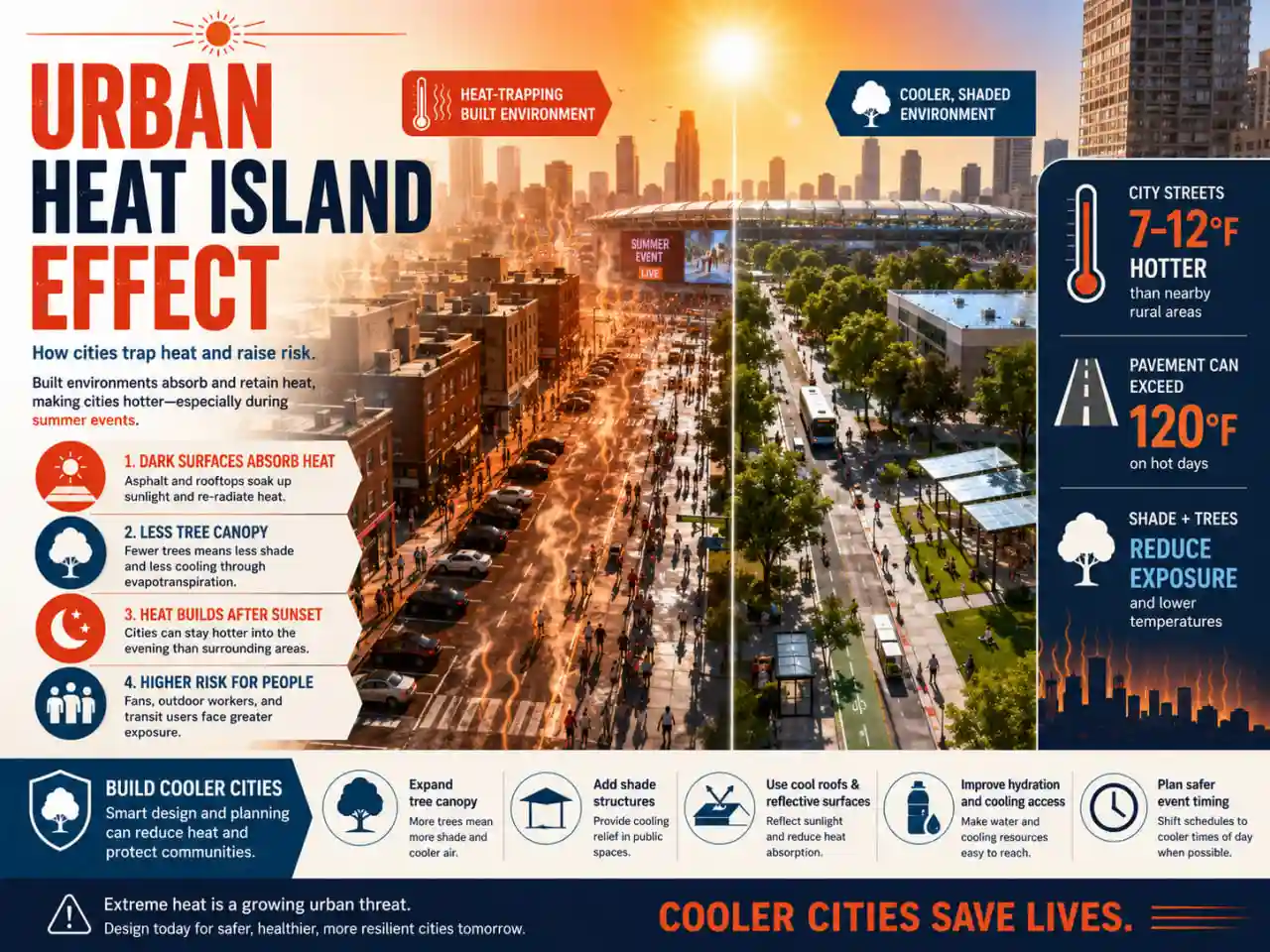
The extreme heat that endangers athletes gets worse in urban areas. This is because of the urban heat island effect, which, according to MIT’s Climate Portal, is a phenomenon where city temperatures are 1 to 7 degrees Fahrenheit hotter than the countryside. Natural areas have ways to regulate heat, such as tree shade and evaporating water that absorbs heat. Urban environments, on the other hand, often lack these cooling mechanisms and can experience more heat.
The rising temperatures of climate change, combined with high humidity and urban surfaces, create a dangerous mix that puts athletes at risk.
FIFA’s Response to the Heat
The cities lending their stadiums for FIFA are forecasted to experience extreme heat during the 2026 games. A study published the year prior predicts that 14 out of 16 host cities will experience extreme heat that breaks the WBGT, or Wet Bulb Globe Temperature, threshold for safety. WBGT is an index that helps measure the potential danger of extreme heat on the body.
FIFA organizers have announced plans to keep players safe during matches. These plans include mandatory three-minute cooling breaks, climate-controlled benches for staff and substitutes, and the use of WBGT measurements. Organizers are also planning to protect fans by allowing them to bring water bottles and by having venues set up additional measures such as shaded areas and misting zones.
Scientists are largely skeptical of these measures, including 20 experts from across the globe who signed a letter urging FIFA organizers to reconsider their approach. They are calling for FIFA to delay or postpone matches above 28°C WBGT, have longer cooling breaks of at least six minutes, create improved cooling facilities for players, and follow regular updates to guidelines based on the latest science. Simms was one of the letter coordinators who spoke on behalf of the signees when he said, “We’re worried that FIFA is playing recklessly with the health and safety of players.”
It is clear that athletes at the World Cup and the fans who fill the stadiums are at risk because of extreme heat. However, these people are also an example of how climate change works with city surfaces to raise temperatures and make life more difficult for those living in concrete-heavy environments.
This is especially harsh for lower-income and minority communities who, according to MIT, often live in areas that are especially vulnerable to overheating. As a result, they are more likely to experience illnesses such as heat stroke, heat exhaustion, and even heart attacks.
What Host Cities Are Doing
In the wake of heat-related concerns surrounding the FIFA World Cup, city officials are taking their own precautions to keep fans safe during the games.
In Miami, the National Weather Service is working at Hard Rock Stadium and other areas to monitor conditions and provide briefings. A spokesperson for the local host committee said that shade, access to hydration, and cooling features will be provided for World Cup events in Downtown Miami and local parks.
Houston, meanwhile, is going the extra mile to keep its fans cool. Chron, a local media outlet, reported that the FIFA World Cup Houston Host Committee has approved various projects that serve as cooling zones, including a “Green Corridor” that surrounds the Houston Stadium. The downtown area has also received trees and artificial structures that will provide shade for residents and visiting FIFA fans. These improvements are projected to cool local temperatures by 5%. This is on top of the solar panels being installed at local bathrooms and tents ahead of the Fan Festival, which can lower an area’s temperature by more than 40 degrees. The Rice University campus and Hermann Park will also be open to FIFA fans, and both have trees that provide adequate shade.
In Dallas, two medical stations in climate-controlled locations will be provided at the city’s festival site. Medical personnel will also be given ice and ice immersion bags. Officials will also be working with volunteers to distribute water.
In Los Angeles, the Department of Public Health plans to distribute heat safety guidelines to inform fans on how they can stay safe. It also announced that it will monitor heat-related emergency room visits with a dashboard that will be available to the public.
In Vancouver, city officials plan to establish more temporary drinking fountains, handwashing stations, and misting stations if a federal heat warning is issued.
If there is anything that the heat surrounding the World Cup shows, it is that climate change does not just affect the natural things often associated with environmentalism, such as wildlife or icecaps. It also affects athletics and other societal activities that bring people together.
People who care about the climate and human activities should learn about what solutions are being implemented in their communities. They should look at what committees and local institutions are doing to help society adapt to the climate crisis. If no such action is being taken, they should demand that something be done. That way, both natural and built environments can become more sustainable for life.
Sources
- Associated Press: World Cup, Climate Change, Extreme Heat and Soccer Safety
- MIT Climate Portal: Urban Heat Islands
- German Journal of Exercise and Sport Research: Exercise and Heat Stress
- BBC Sport: Football and Extreme Heat Concerns
- Chron: Houston World Cup Heat Plan
- Climate Central: World Cup Matches and Heat Risk
- Los Angeles Times: FIFA World Cup, Climate Change, and Dangerous Heat
- WLRN: World Cup Miami Heat and Temperature